
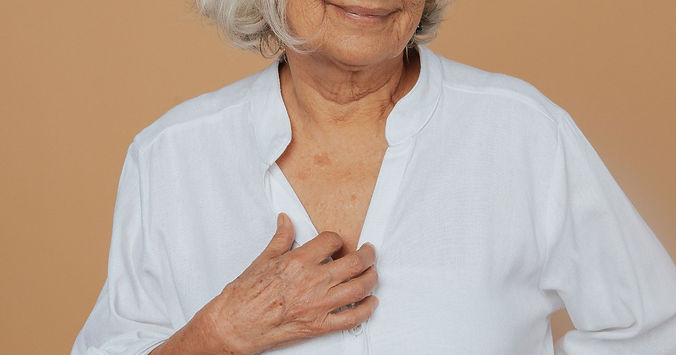
Crepey or Thin Skin After 50: What Actually Helps (not just collagen)
If your skin has started to feel more fragile, bruising easier, tearing, or just not bouncing back…
When skin starts feeling crepey, thin, or fragile…it’s not just a skincare issue
If you’ve noticed your skin looking more crepey…or feeling thinner, more fragile, or slower to bounce back…you’re not just noticing a change. You’re adjusting.
-
Pulling your sleeves down a little more.
-
Choosing tops that don’t show your chest or neck.
-
Becoming more aware of your hands than you used to be.
-
Maybe even feeling like your skin looks dull…tired…not like you.
And no one really talks about this part.
What to do when your skin doesn’t just look older…it starts to feel fragile.
This is one of the most common concerns I hear from women over 50 especially when crepey or thin skins shows up on the arms, hands, and chest.
And most of the advice out there?
-
More lotions or potions.
-
Or “just take some collagen.”
If you’ve tried that and still feel like nothing is really changing…there’s a reason.
Why skin gets crepey, thin, and fragile after 50
This isn’t just about dry skin. As we age, the body starts to shift:
-
Collagen production slows down
-
Skin becomes thinner and less resilient
-
Stress increases collagen breakdown
-
The body doesn’t repair as efficiently
That’s why skin can start to:
-
look crepey
-
bruise more easily
-
feel fragile or “paper thin”
-
not bounce back like it used to
This is less about what’s happening on your skin…and more about what’s happening within your body.
Why collagen alone doesn’t always work
Collagen can help. But it’s not the full answer.
Because your body still has to:
-
absorb it
-
use it
-
and not break it down faster than it’s rebuilt
If those pieces aren’t supported, collagen becomes something you take…not something your body uses well.
That’s why so many women feel like they’re “doing all the right things” and still not seeing much change.
A different way to support your skin
I don’t approach this as a skincare issue anymore. I look at it as a rebuild issue.
So I start here:
Gut first: Because if your gut isn’t functioning well, your body won’t absorb what it needs
Stress second: Because stress breaks down collagen and slows repair
Third: Support the rebuild
Now your body is in a better position to actually use collagen and rebuild structure
What actually supports skin that feels crepey, thin, or fragile
This isn’t about one product. It’s about supporting how your body rebuilds.
What I use and recommend
Instead of relying on one product, I focus on supporting the body as a whole:
Gut support
Helps improve absorption and supports the foundation for rebuilding
Stress support
Supports a more stable internal environment for repair
Collagen support
Provides the building blocks for skin structure and elasticity
This is where I’ve seen the biggest difference…not just in how skin looks, but how it behaves.
What to expect
This isn’t overnight. But over time, many women notice:
-
Skin feels and looks less fragile
-
Texture softens
-
Skin appears a little thicker and more resilient
-
Less reactivity (bruising, sensitivity)
-
More even tone
-
Feel less self-conscious
If this sounds like you…
I put together exactly what I use and why, so you can take a look and decide if it makes sense for you.
Or message me if you want help deciding what’s right for you.
Why not all collagen works the same
Most collagen products are built around one idea: “Add more collagen.”
But here’s the part that often gets missed…Your body has to actually:
-
absorb it
-
recognize it
-
and use it to rebuild tissue
What makes this one different
The collagen I use is built differently with longevity in mind. Instead of larger collagen molecules, it uses specific collagen peptides (tripeptides) that are easier for the body to absorb and use.
It also includes:
-
support for hydration (not just structure)
-
nutrients that help your body actually build collagen
-
gut-brain support, which plays a role in how the body repairs
-
mood support
-
support for digestion
-
bone health / bone density support
-
and cognitive support
So instead of just “adding collagen”… you’re supporting how your body uses it.
Why that matters
Because at this stage, it’s not just about having collagen. It’s about how well your body can use it and rebuild with it
FAQ'S
Why is my skin getting thinner as I get older?
As we age, collagen production naturally slows down and the skin loses some of its structure. At the same time, the body doesn’t repair as efficiently… especially under stress. That combination can lead to skin that feels thinner, more fragile, and slower to bounce back.
Why does my skin bruise or tear so easily now?
When skin becomes thinner and less supported, it’s more sensitive to pressure and impact. Blood vessels are closer to the surface, and the skin doesn’t have the same resilience it used to… which can lead to easier bruising or tearing.
What causes crepey skin on arms, chest, and hands?
Crepey skin is usually a combination of:
-
reduced collagen
-
loss of elasticity
-
dehydration
-
and slower skin repair
It often shows up on the arms and hands first because the skin is naturally thinner in those areas.
Why does my skin look dull or tired even when I moisturize?
Moisturizers help the surface of the skin… but they don’t address what’s happening underneath. When the body is under stress or not rebuilding efficiently, skin can start to look dull, flat, or uneven… even if you’re taking care of it.
Does stress really affect my skin?
Yes. Stress increases cortisol, which can:
-
break down collagen faster
-
slow the body’s repair process
-
contribute to inflammation and uneven tone
That’s why stress often shows up as changes in the skin over time.
Does collagen actually help crepey or thin skin?
Collagen can help support skin structure…but it works best when your body can:
-
absorb it
-
use it
-
and isn’t breaking it down faster than it’s being rebuilt
That’s why a more complete approach often works better than collagen alone.
Why do so many collagen products not seem to work?
Many collagen products focus on adding more collagen…but don’t address whether the body can actually use it effectively. If absorption, stress, and repair aren’t supported, results can feel minimal or inconsistent.
Can thin or crepey skin improve, or is this just aging?
Skin can improve. But it usually requires a shift in approach…from focusing only on the surface to supporting how the body rebuilds and maintains structure over time.
What’s the best way to support fragile, aging skin?
Instead of relying only on creams or one product, a more effective approach is to support:
-
absorption (gut health)
-
stress response (to protect collagen)
-
and rebuilding (with usable collagen support)
This helps the body do what it’s already trying to do… more effectively.